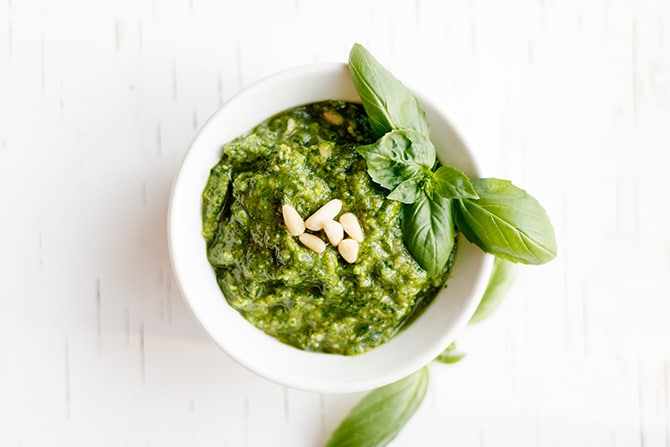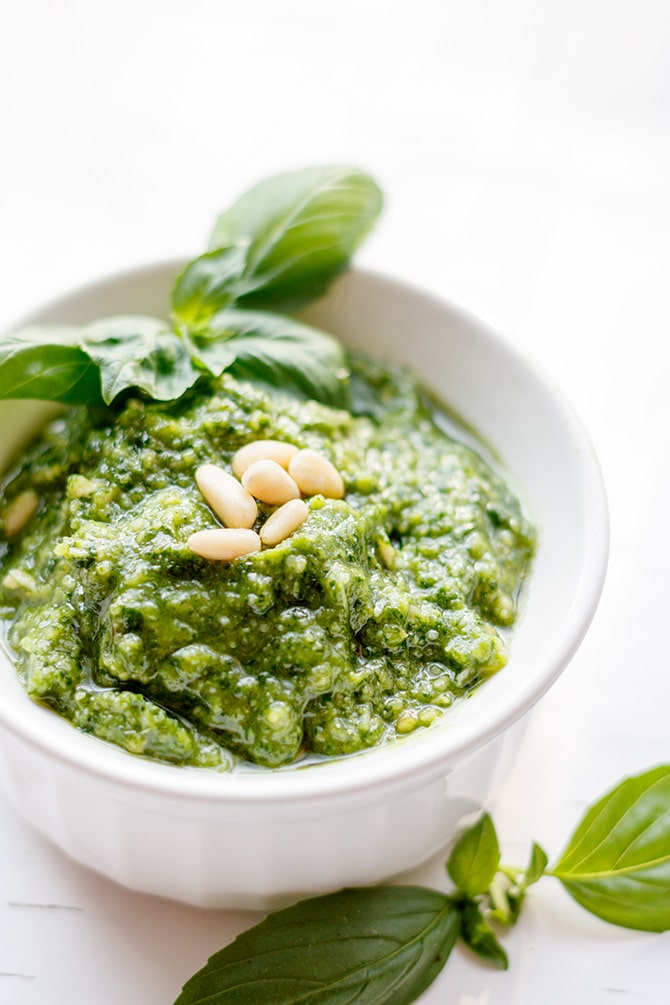

I love basil pesto and usually always have a jar in the fridge or pantry.
When I’m feeling lazy and not much like making dinner, I’ll usually grill up some chicken, cook some pasta, and add the pesto for super simple pesto chicken pasta.
I got a bug up my butt the other day and decided I wanted to make homemade basil pesto instead of buying a jar of it. It’s unbelievably simple to make and I’m not 100% sure why I never decided to make it homemade before. Story of my life though.
Table of Contents

What is Homemade Basil Pesto?
Basil pesto, also known as pesto alla Genovese, is a traditional Italian sauce made from fresh basil leaves, pine nuts, garlic, Parmesan cheese, and olive oil. The ingredients are blended together to create a thick, flavorful paste that’s perfect for adding a burst of flavor to a variety of dishes. The word “pesto” comes from the Italian word “pestare,” which means “to pound” or “to crush,” referring to the traditional method of making pesto using a mortar and pestle.
Why You’ll Love this Recipe
This homemade basil pesto recipe is not only delicious but also incredibly easy to make. With just a few simple ingredients and a food processor, you can whip up a batch of fresh pesto in minutes. Plus, making your own pesto allows you to control the quality and freshness of the ingredients, ensuring a superior flavor compared to store-bought versions. Whether you’re a seasoned cook or a kitchen novice, you’ll find this recipe straightforward and rewarding.
Other Pesto Recipes
Ingredients
- Fresh Basil Leaves: The star of the show, fresh basil leaves bring a vibrant, aromatic flavor that is both sweet and slightly peppery.
- Pine Nuts: These small, buttery nuts add a rich, nutty flavor and a creamy texture to the pesto.
- Grated Parmesan Cheese: This hard, salty cheese adds a savory depth and umami richness to the sauce.
- Minced Garlic: Fresh garlic provides a pungent, spicy kick that balances the sweetness of the basil.
- Olive Oil: A good quality olive oil binds all the ingredients together, adding a smooth, luscious texture and a fruity, slightly bitter flavor.
Substitutions & Additions
If you don’t have pine nuts on hand, you can substitute them with other nuts such as walnuts, almonds, or cashews. Each type of nut will give the pesto a slightly different flavor and texture, so feel free to experiment and find your favorite combination. Additionally, you can add a squeeze of lemon juice for a bright, tangy twist or a handful of spinach or arugula for added greens.
GET NEW POSTS via EMAIL:
How to Make this Recipe
- Prepare the Ingredients: Start by gathering all your ingredients. Make sure the basil leaves are clean and dry, as any excess water can affect the consistency of the pesto.
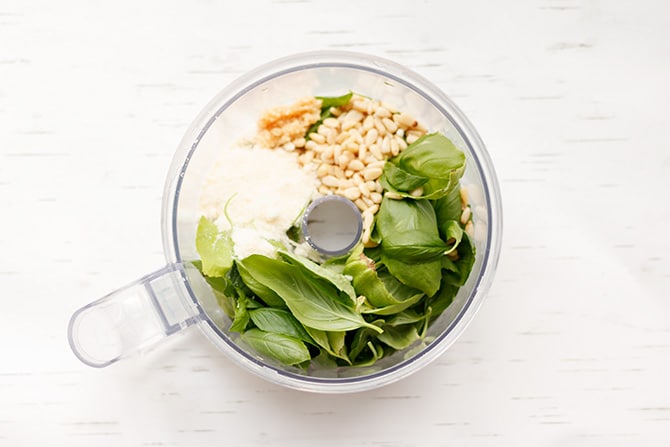
- Blend the Ingredients: Add the basil leaves, pine nuts, grated Parmesan cheese, and minced garlic to a food processor. Pulse a few times to combine the ingredients and break them down slightly.
- Add the Olive Oil: With the food processor running, slowly drizzle in about half of the olive oil. Continue to pulse until the mixture starts to come together.
- Adjust the Consistency: Scrape down the sides of the food processor and season the pesto with salt and pepper to taste. Continue to pulse, adding more olive oil as needed, until the pesto reaches your desired consistency. It should be thick and spreadable but not too chunky.
- Taste and Adjust: Taste the pesto and adjust the seasoning if necessary. You can add more salt, pepper, or Parmesan cheese to suit your preferences.
Cooking Tips & Tricks
Use Fresh Ingredients: For the best flavor, use fresh basil leaves and high-quality Parmesan cheese. Avoid using pre-grated cheese, as it often contains additives that can affect the texture of the pesto.
Toast the Nuts: For an extra depth of flavor, lightly toast the pine nuts in a dry skillet over medium heat before adding them to the food processor. Be sure to watch them closely, as they can burn quickly.
Store Properly: To keep your pesto fresh, store it in an airtight container in the refrigerator for up to a week. You can also freeze pesto in ice cube trays for longer storage. Once frozen, transfer the pesto cubes to a freezer bag and use them as needed.

Serving Suggestions
Homemade basil pesto is incredibly versatile and can be used in a variety of dishes. Here are a few ideas to get you started:
- Pasta: Toss cooked pasta with a generous spoonful of pesto for a quick and flavorful meal. Add some cherry tomatoes, grilled chicken, or shrimp for extra protein and color.
- Sandwiches: Spread pesto on your favorite sandwich or panini for a burst of flavor. It pairs especially well with turkey, mozzarella, and roasted vegetables.
- Pizza: Use pesto as a base sauce for pizza instead of traditional tomato sauce. Top with your favorite ingredients, such as fresh mozzarella, cherry tomatoes, and arugula.
- Dip: Serve pesto as a dip with fresh vegetables, crusty bread, or crackers. It’s a great addition to any appetizer spread.
Storage Suggestions
To keep your homemade basil pesto fresh and flavorful, follow these storage tips:
- Refrigeration: Store the pesto in an airtight container in the refrigerator for up to one week. To prevent the pesto from oxidizing and turning brown, pour a thin layer of olive oil on top before sealing the container.
- Freezing: For longer storage, freeze the pesto in ice cube trays. Once frozen, transfer the pesto cubes to a resealable plastic bag or airtight container and store in the freezer for up to three months. This way, you can easily thaw just the amount you need.
- Avoid Heat and Light: Keep the pesto away from direct sunlight and heat sources to maintain its vibrant color and fresh flavor.

Recipe FAQ
Can I make pesto without a food processor? Yes! While a food processor makes the process quicker and easier, you can also make pesto using a mortar and pestle. Simply crush the ingredients together until they form a smooth paste.
How can I prevent my pesto from turning brown? To keep your pesto vibrant green, blanch the basil leaves in boiling water for a few seconds, then immediately transfer them to an ice bath before blending. This helps to preserve the color.
Can I make pesto in advance? Absolutely! Pesto can be made ahead of time and stored in the refrigerator for up to a week or frozen for longer storage.
More Dips & Dressing Recipes
Making homemade basil pesto is a simple and rewarding process that yields a delicious and versatile sauce. With just a few fresh ingredients and a food processor, you can create a flavorful pesto that will elevate your meals and impress your family and friends. Give this recipe a try, and don’t forget to experiment with different nuts and additional ingredients to make it your own.

Homemade Basil Pesto
Ingredients
- 2 cups fresh basil leaves
- ⅓ cup pine nuts
- ⅓ cup grated Parmesan cheese
- 3 cloves garlic minced
- ⅓ cup olive oil
Instructions
- Add basil, pine nuts, cheese, and garlic to food processor. Add about 1/2 of the olive oil and begin to pulse.2 cups fresh basil leaves, 1/3 cup pine nuts, 1/3 cup grated Parmesan cheese, 3 cloves garlic
- Slowly add remaining olive oil while pulsing. Scrape down sides of food processor and season with salt and pepper.1/3 cup olive oil
- Pulse again adding more olive oil, as needed, to reach desired consistency.


Comments (0)